Project VAYUVEGA
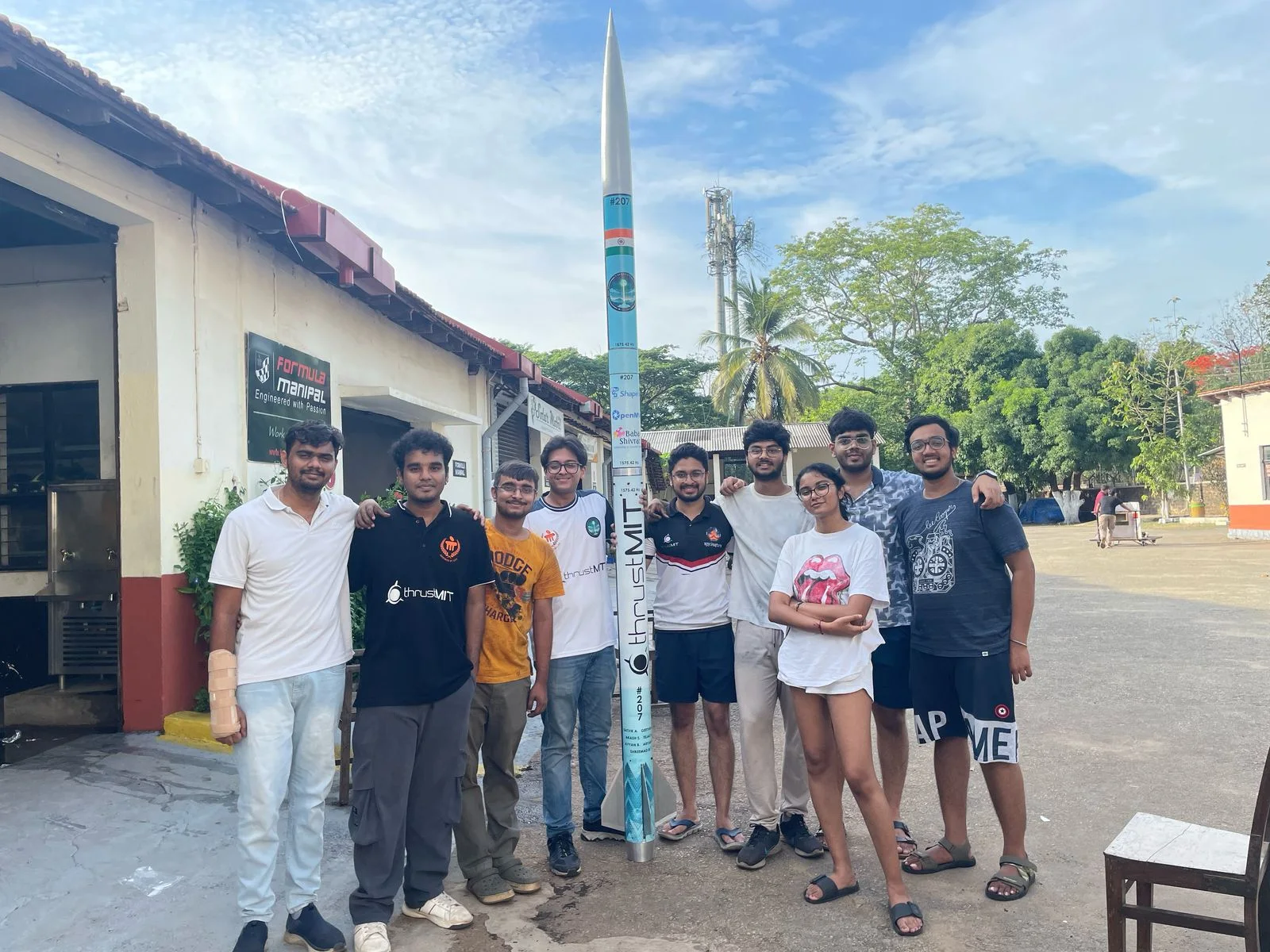
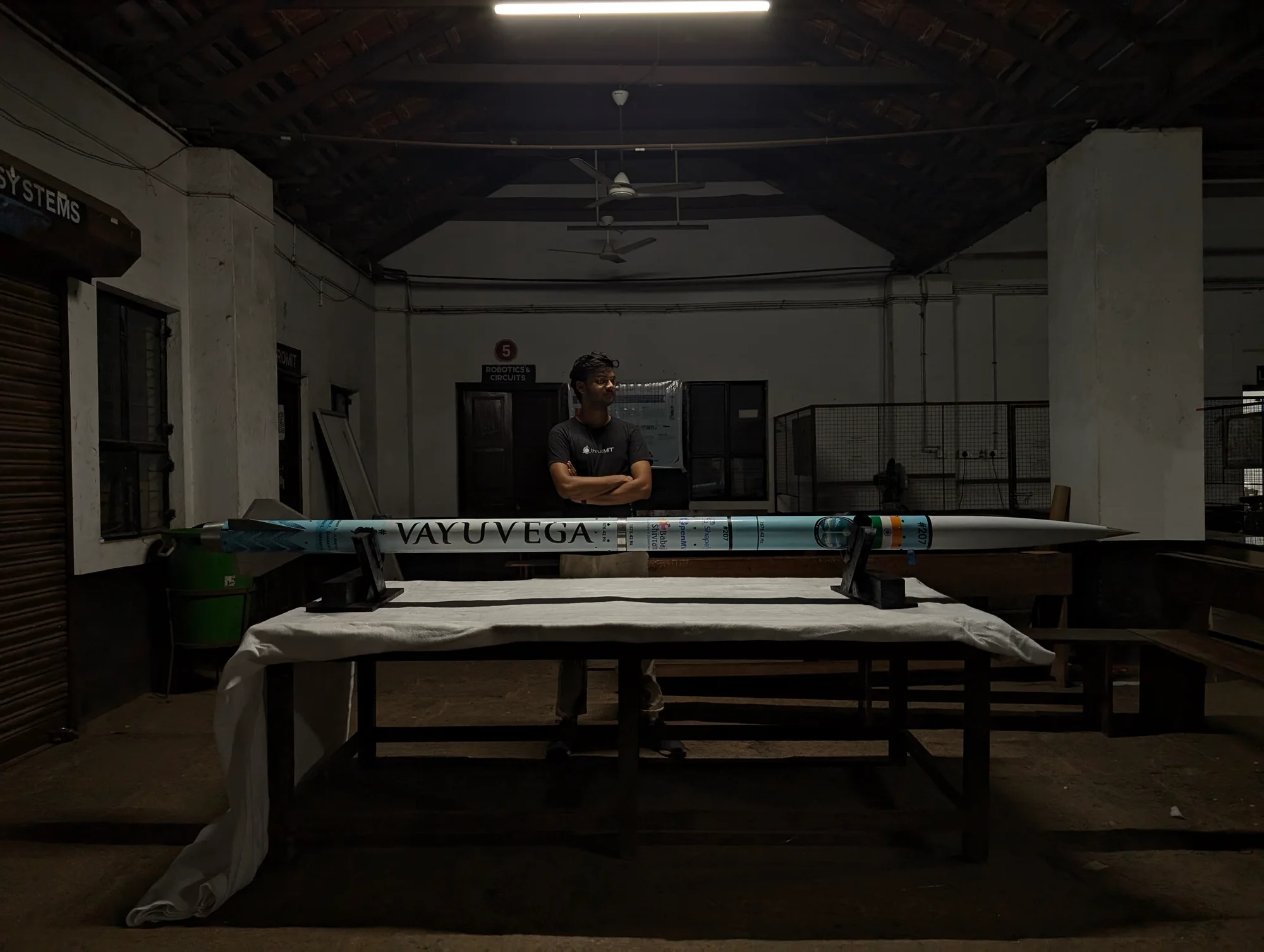
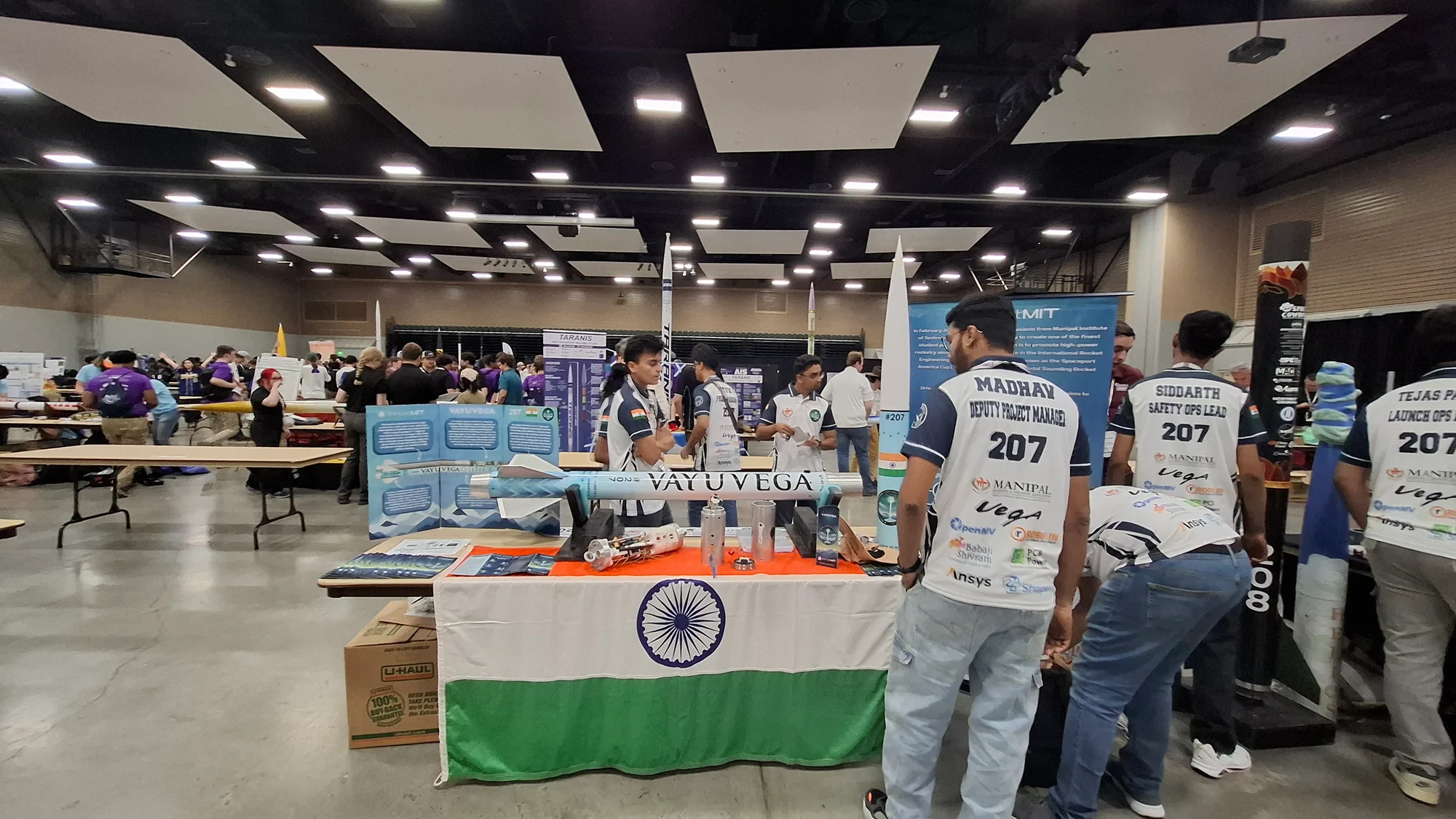
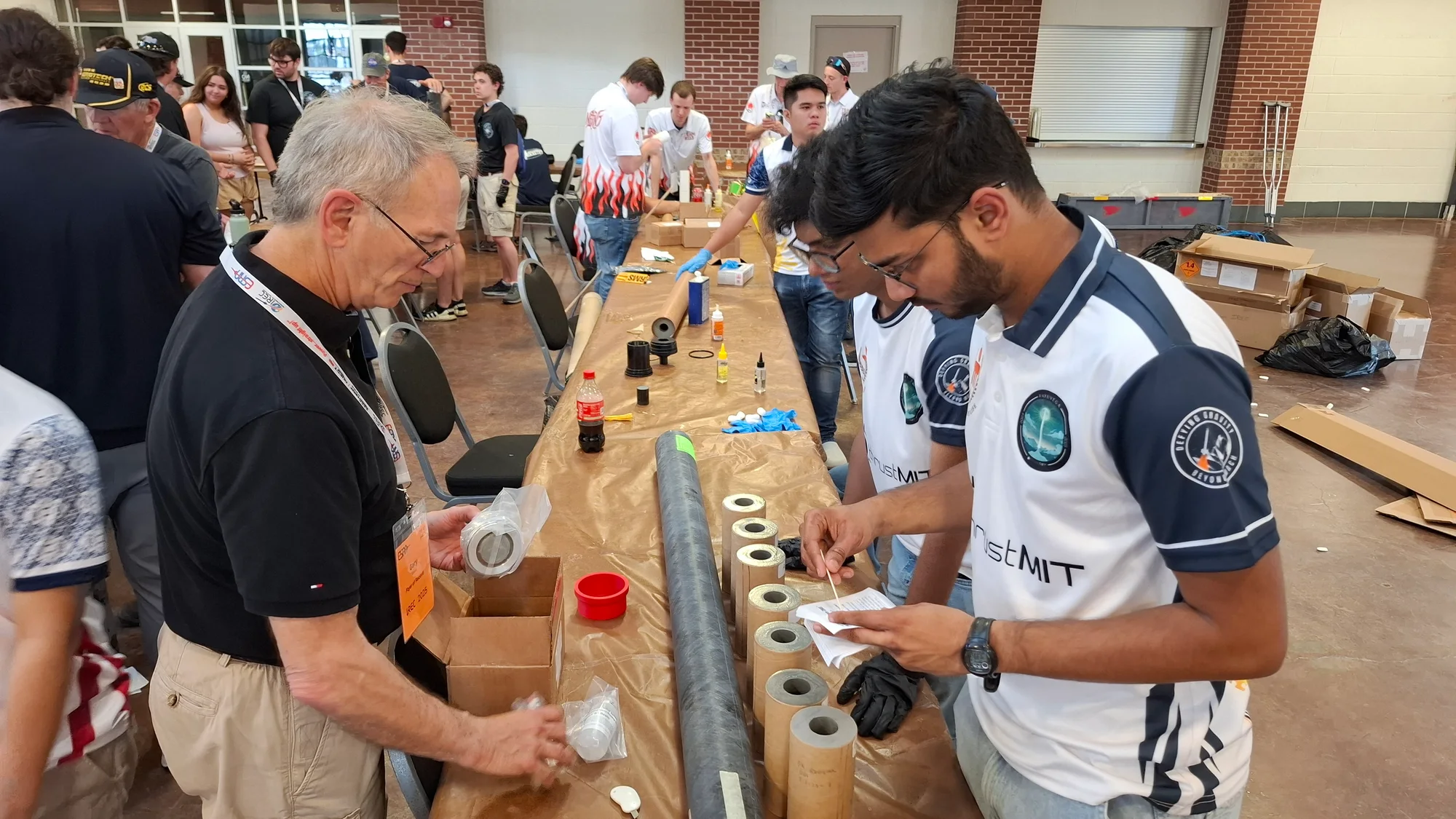
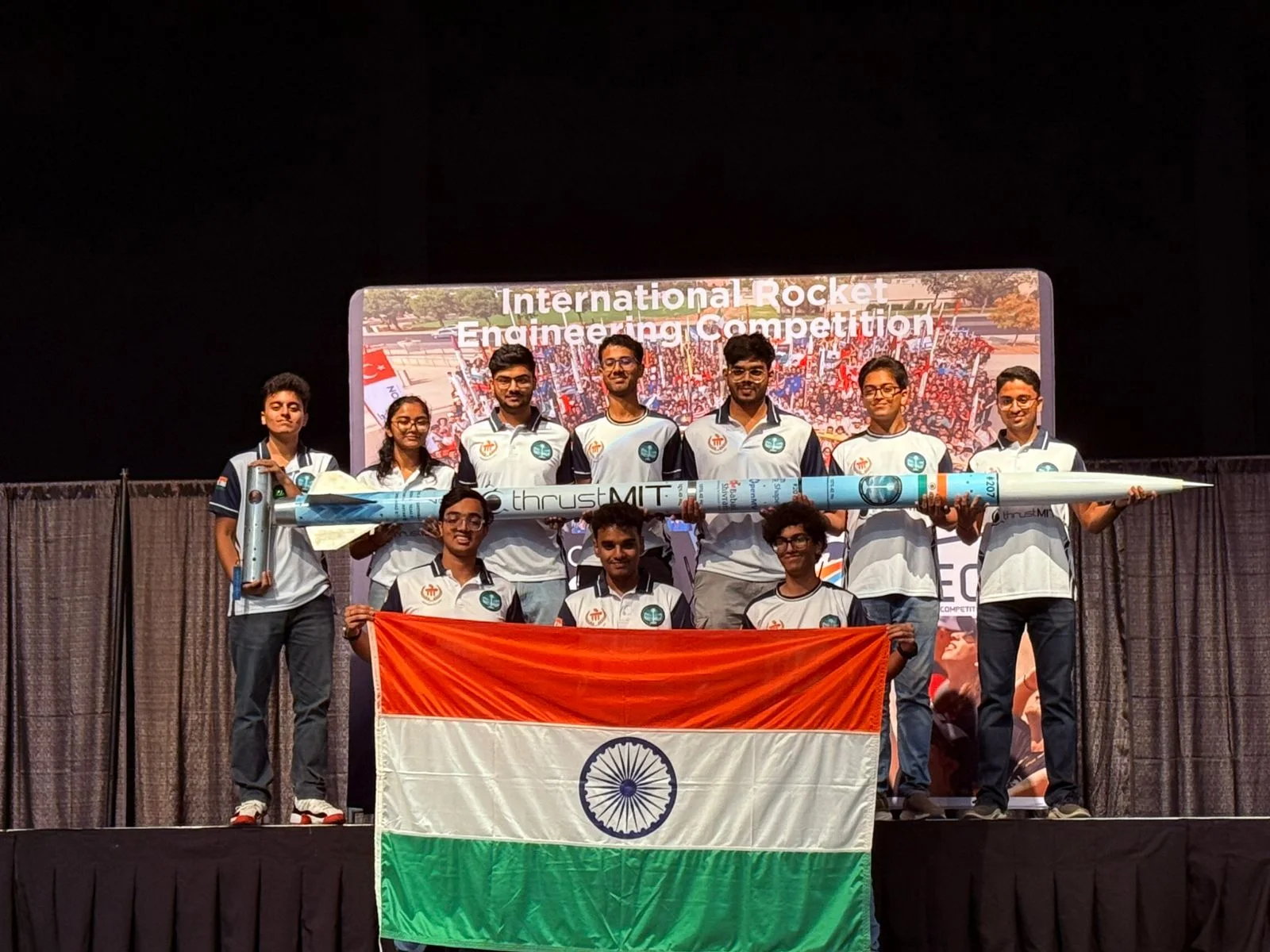
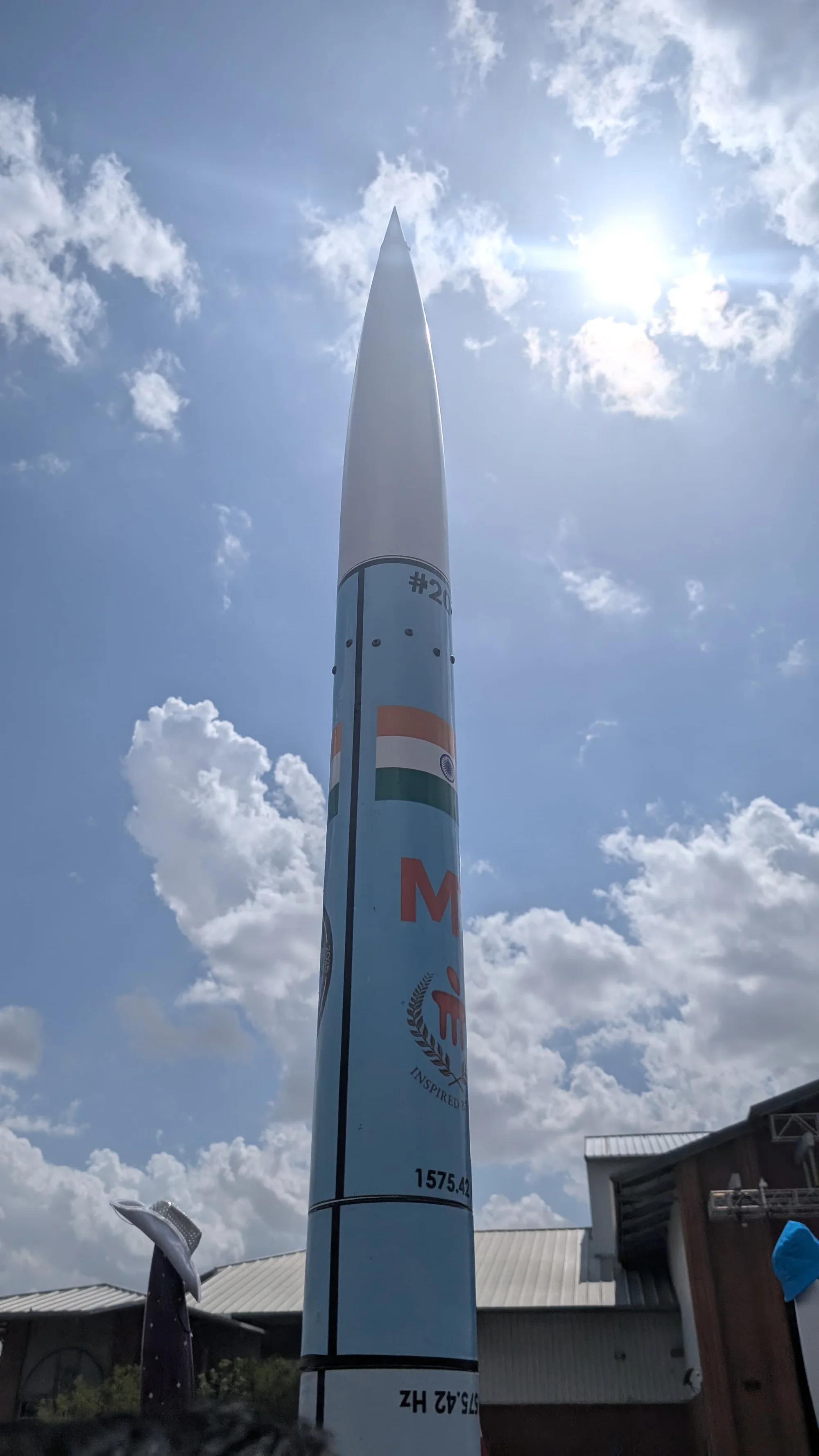
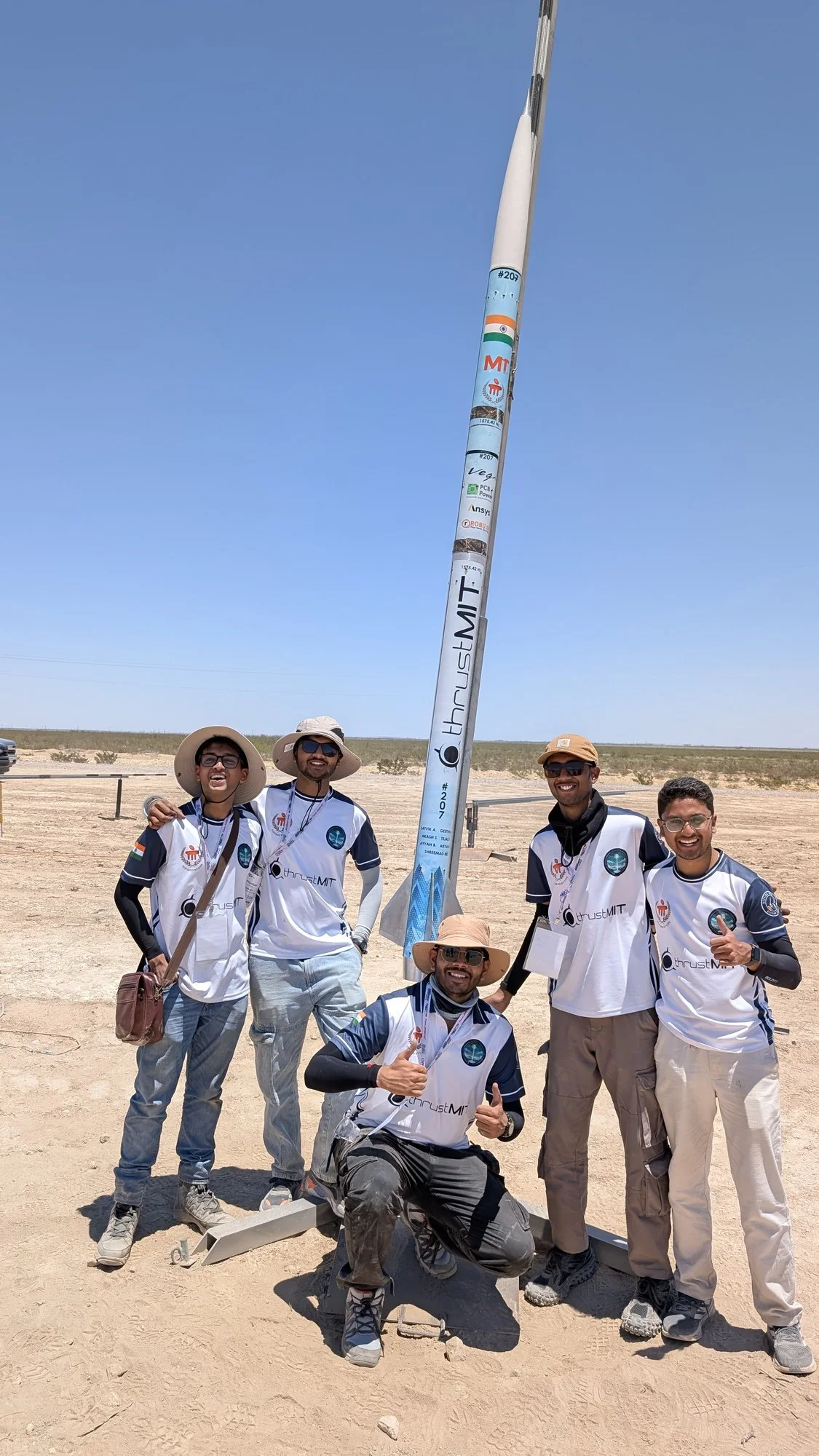
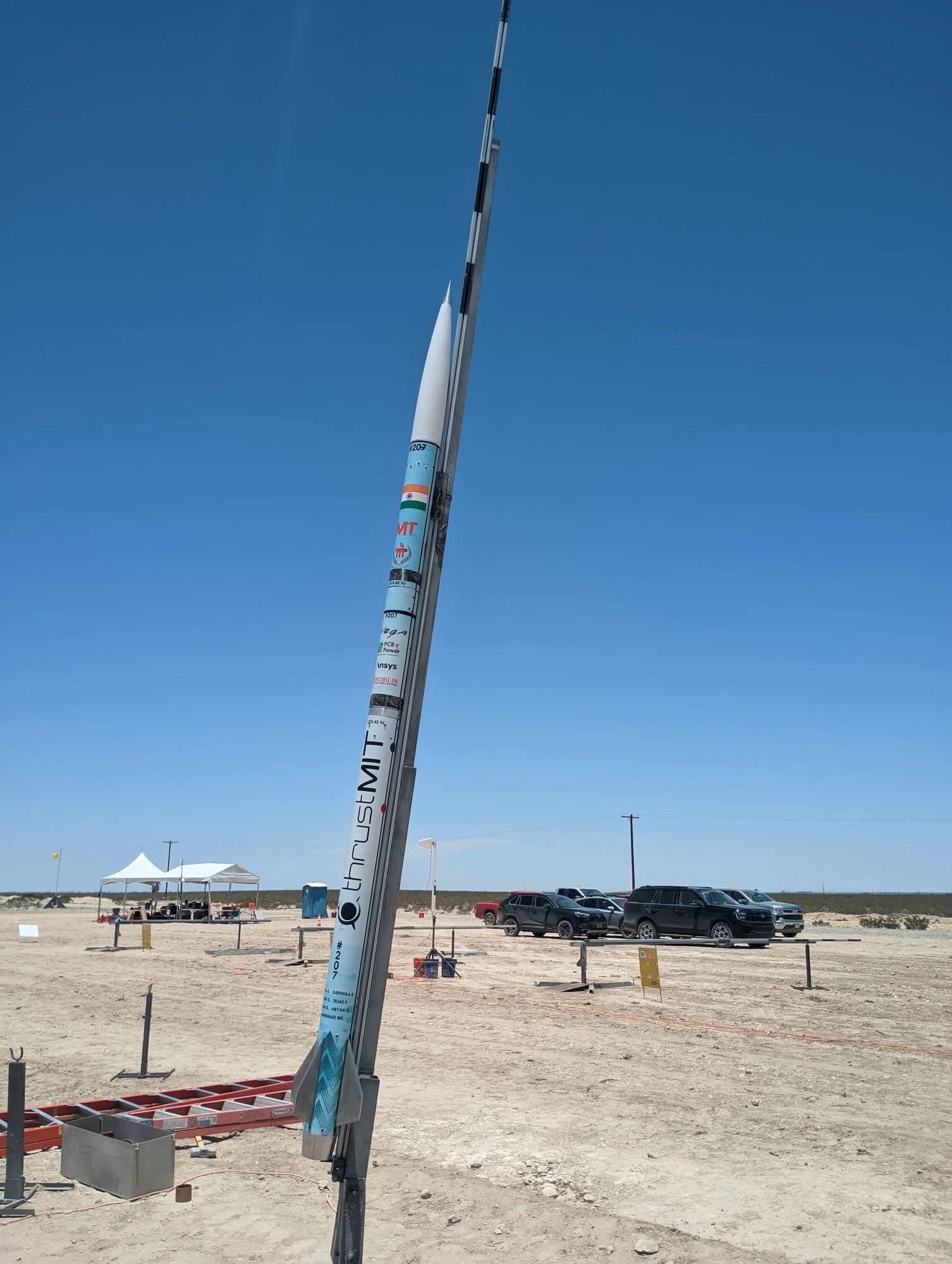
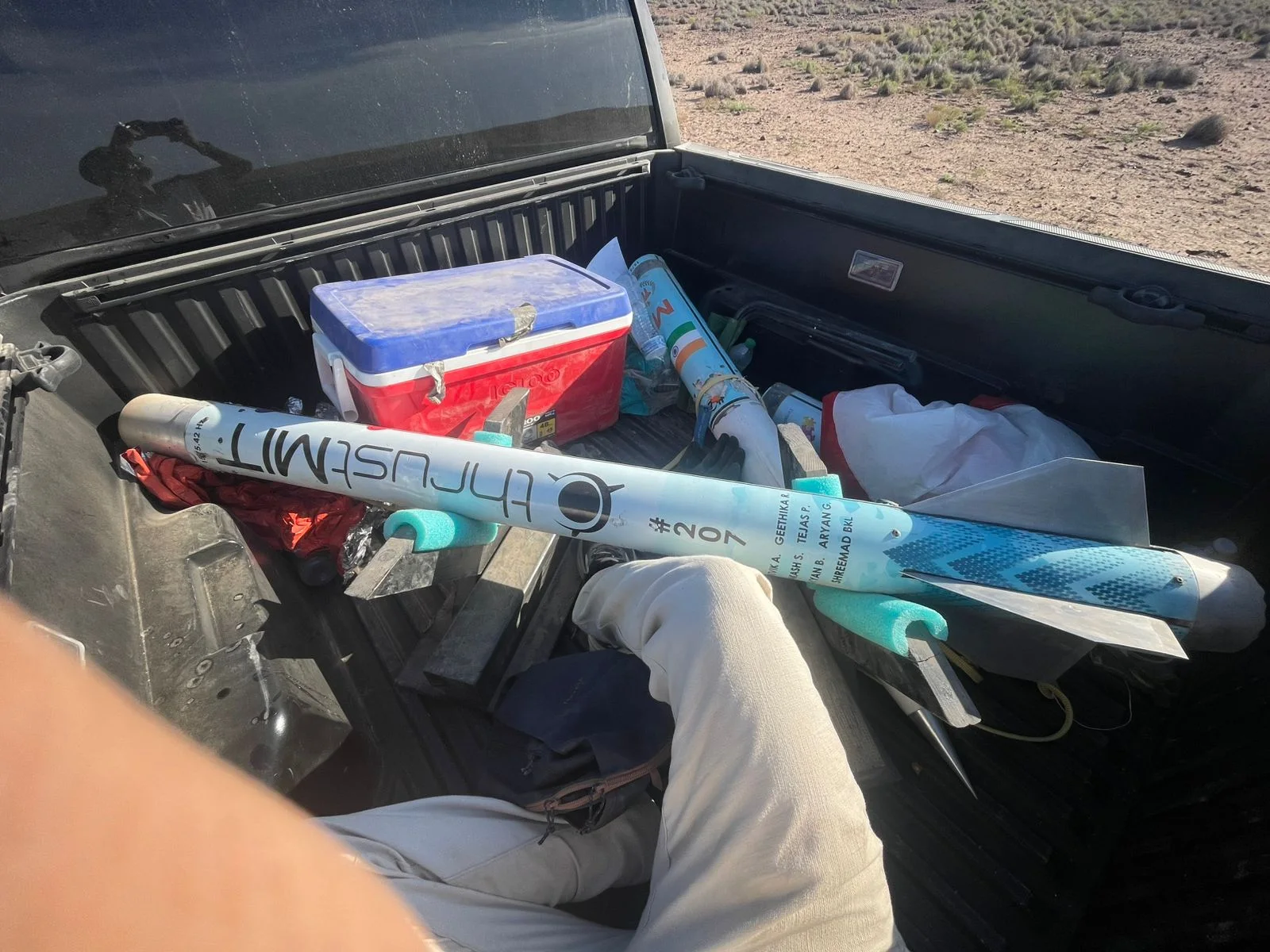
The seventh rocket in thrustMIT's lineage, and the flagship of my tenure as mechanical & propulsion lead. Flew to 29,432 ft on an AeroTech O5500X motor, recovered cleanly, took 4th place in category at IREC 2025.
RoleDeputy Project Manager · Mechanical & Propulsion Lead
- 2nd Prize Worldwide in SDL Payload Design Challenge
- 4/21 in 30K COTS category
- 22/159 in Overall Standings
- Highest Barrowman Score in 30K COTS category
- 18/159 Overall in James Barrowman Award
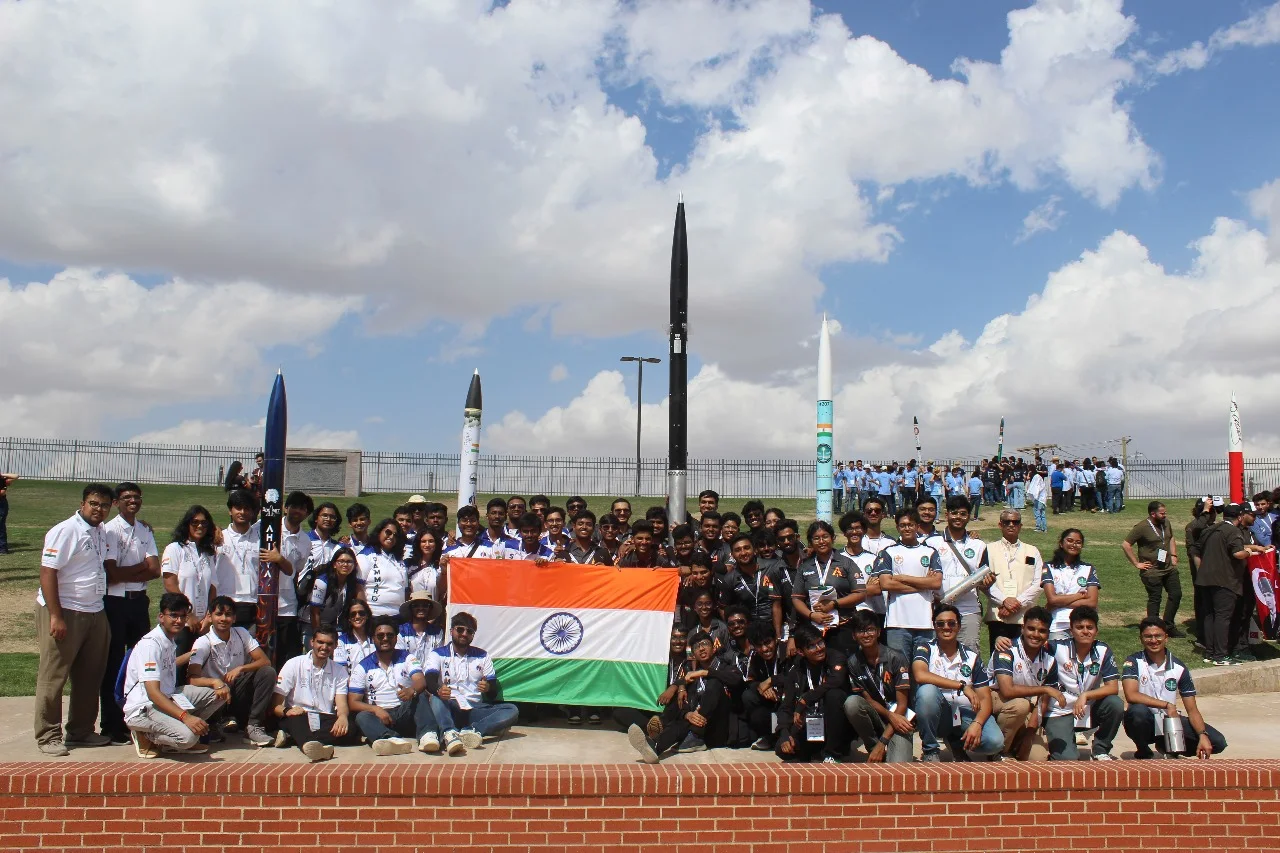
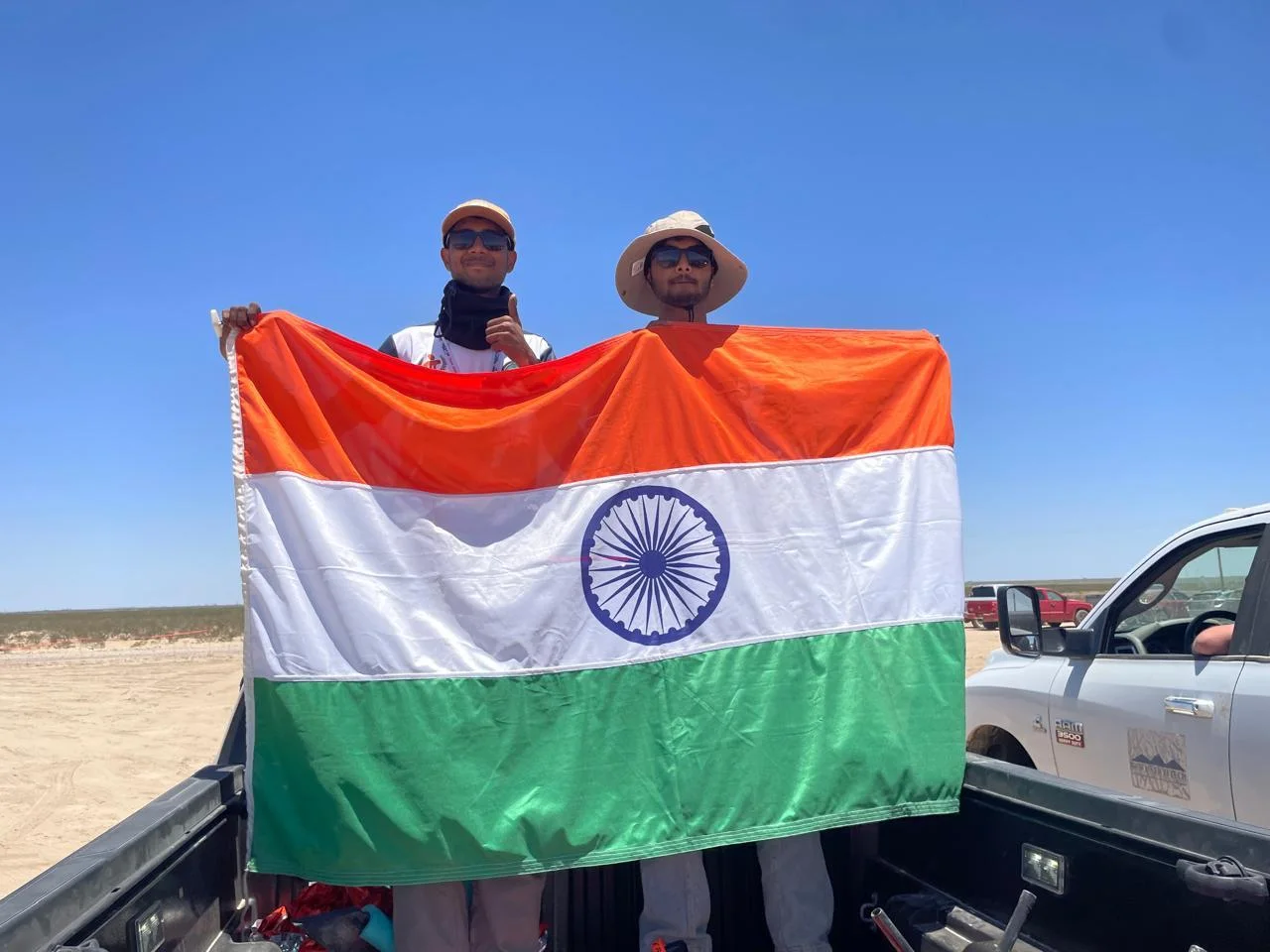
- Top Team from India in Overall Standings
Inside VAYUVEGA
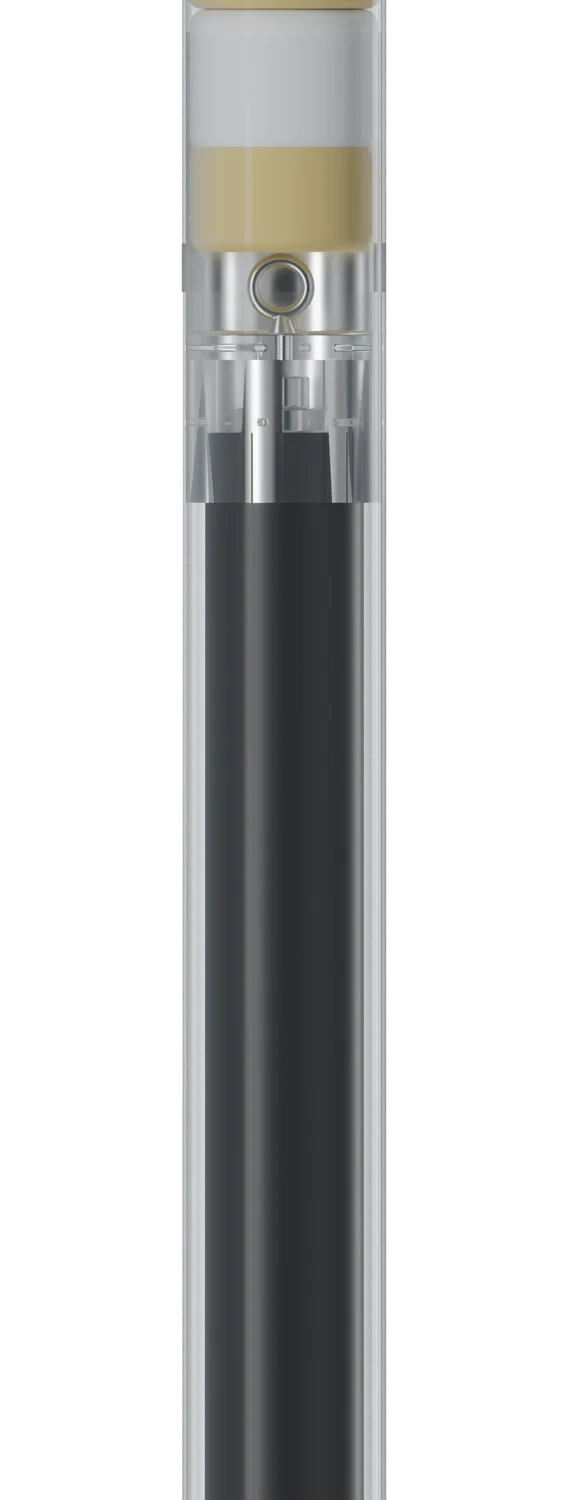
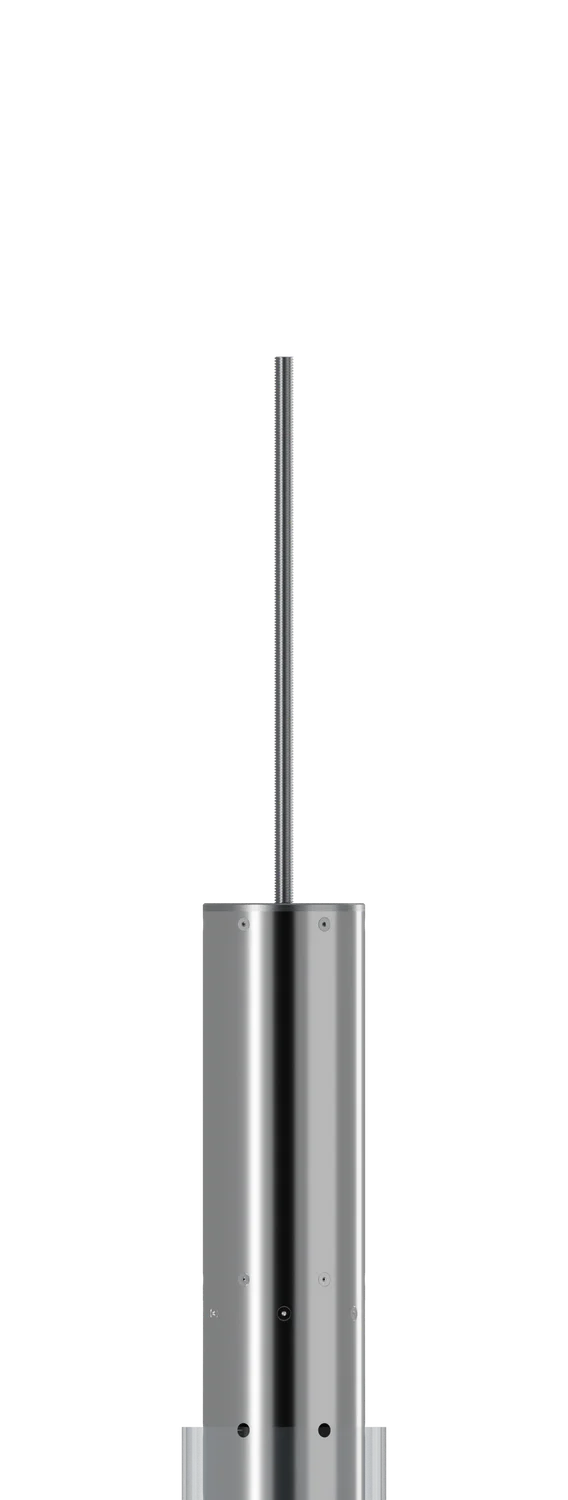
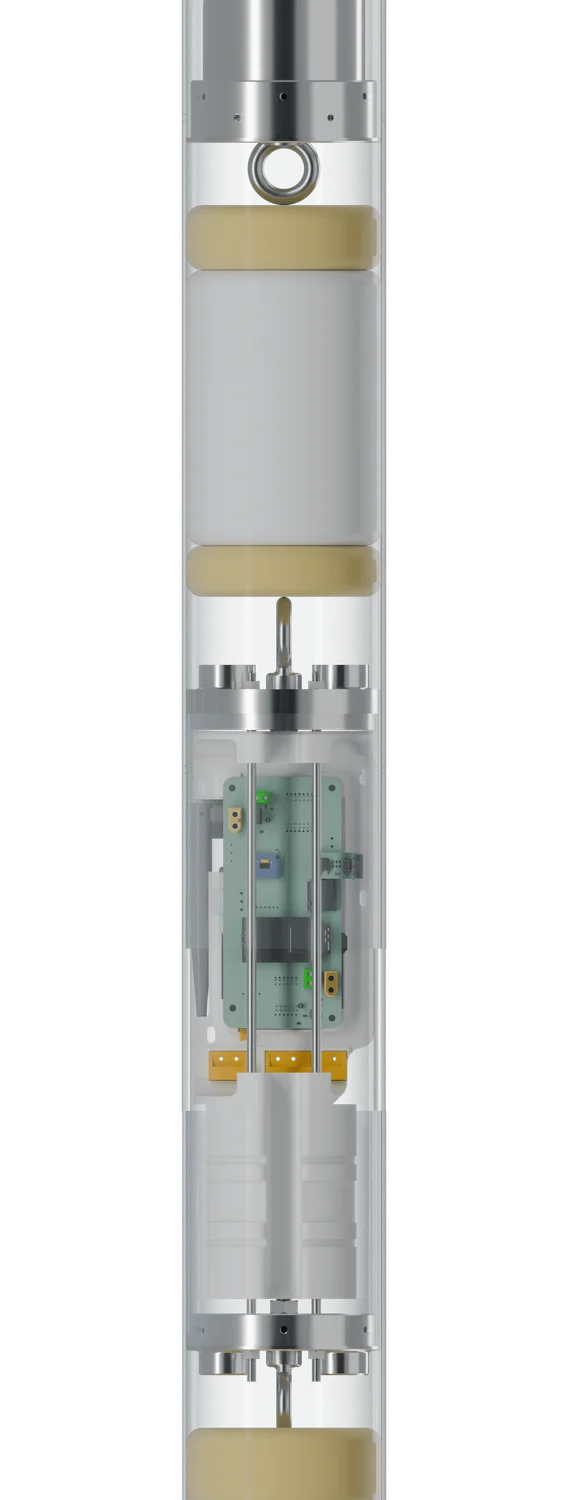
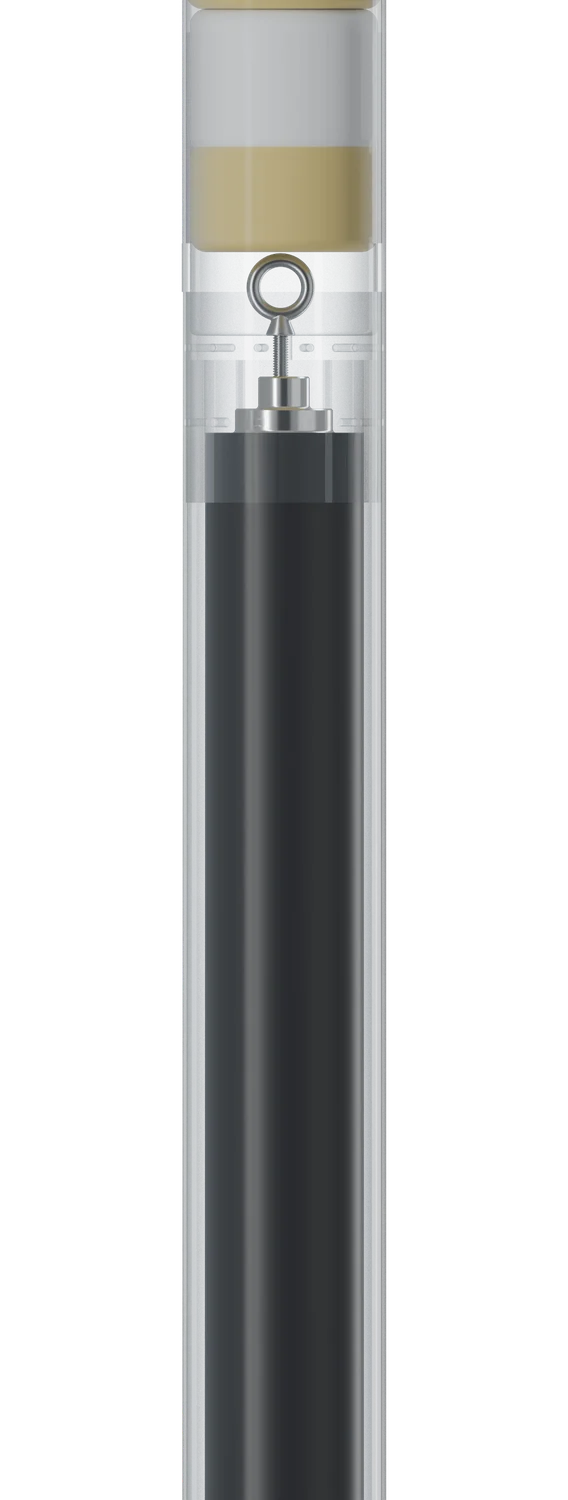
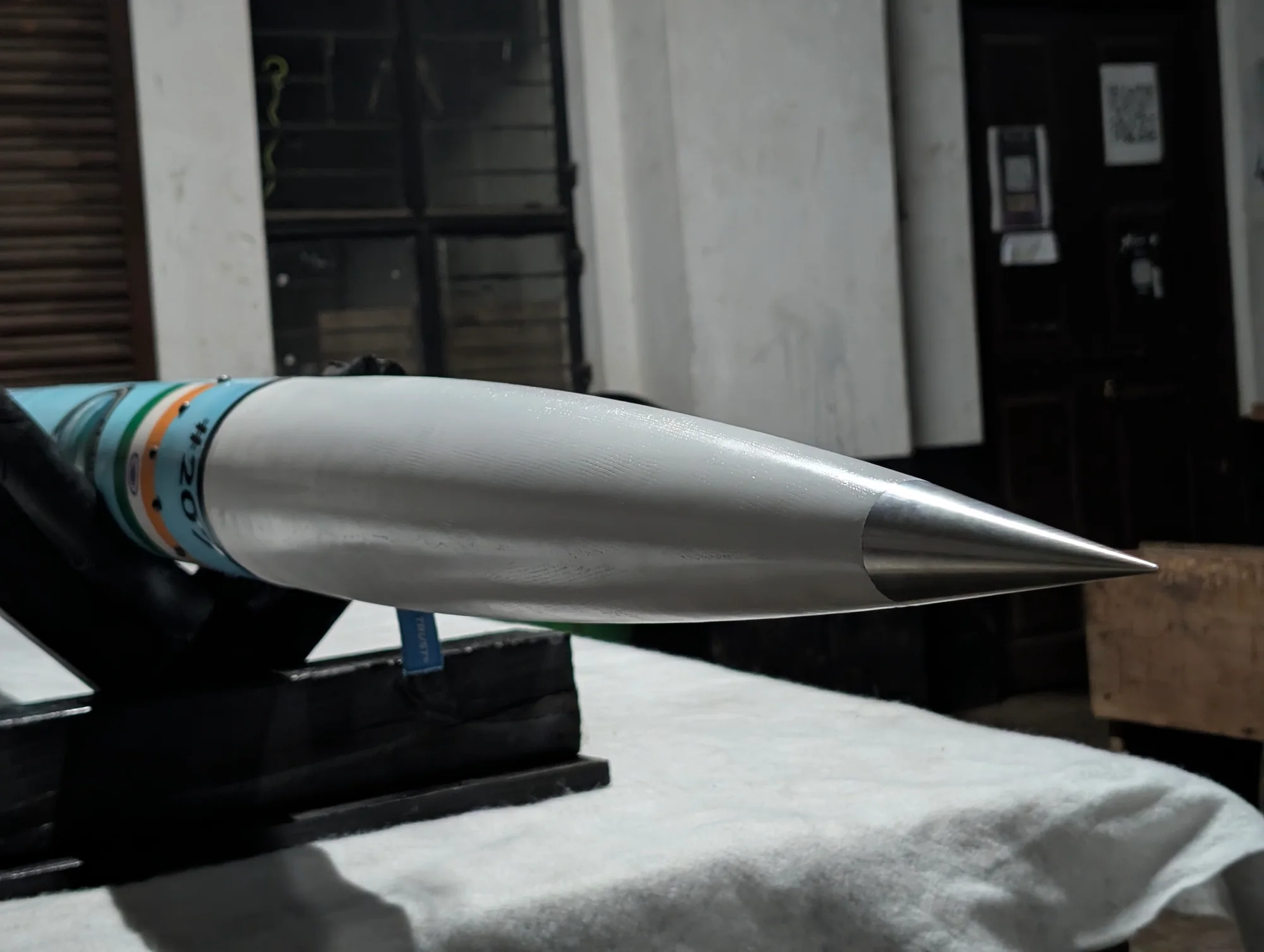
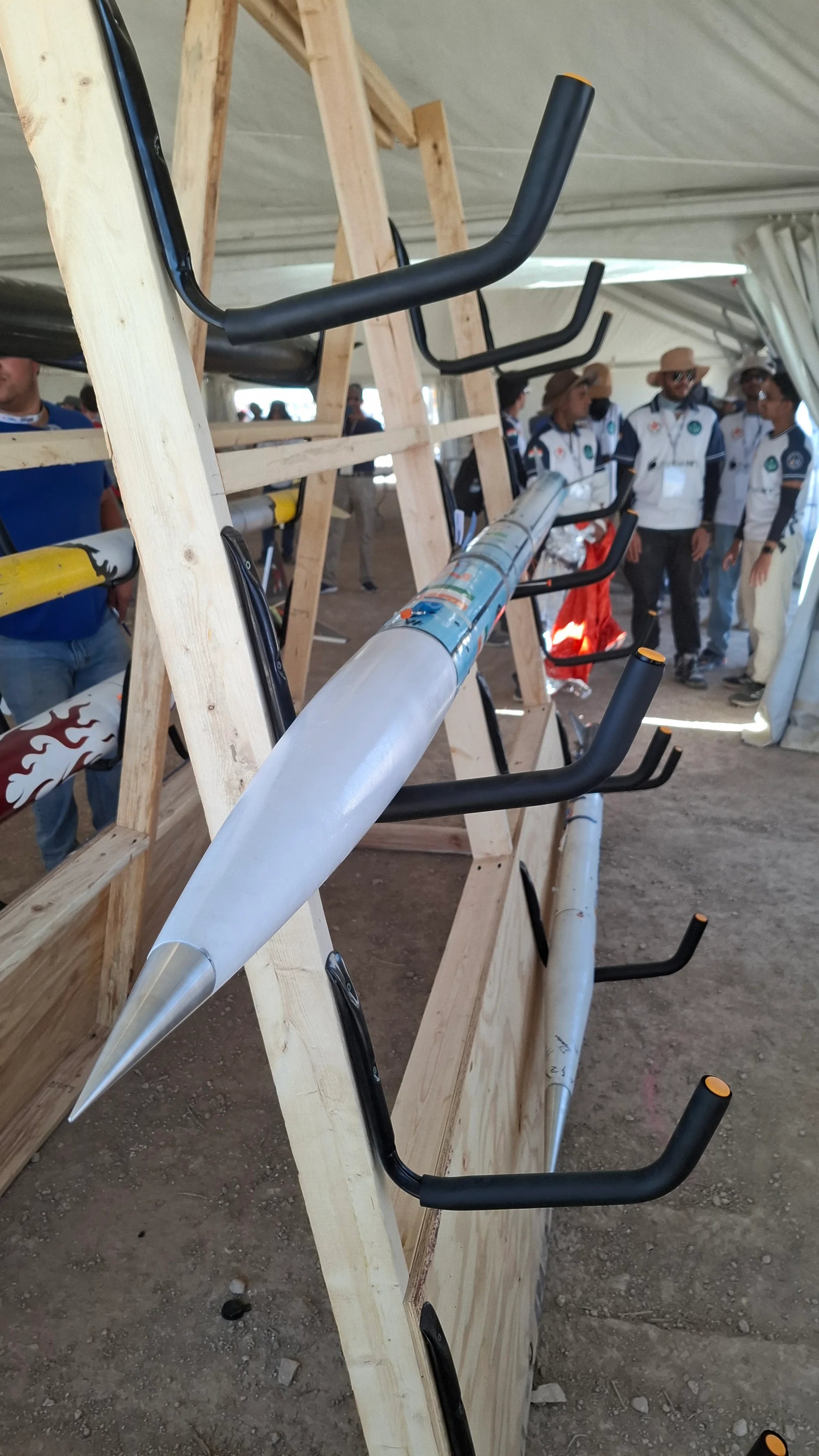
Nose cone
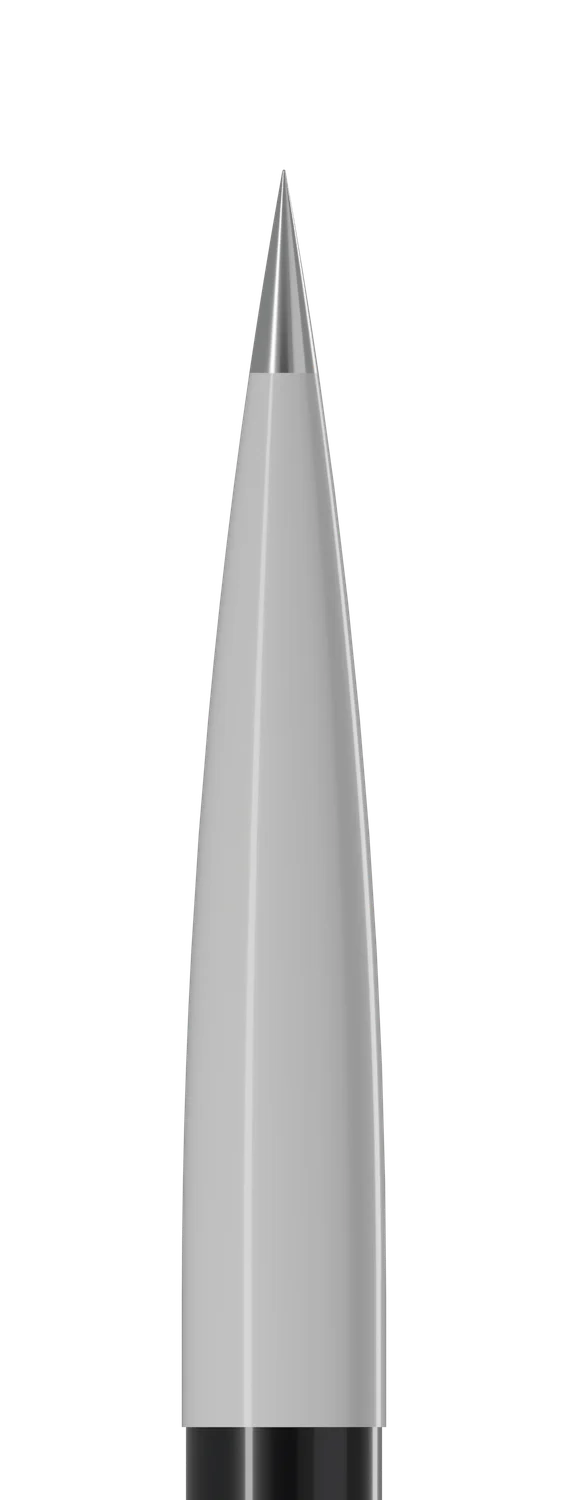
A tangent ogive, 5.6 times as long as it is wide: the ratio with the lowest drag in simulation. Carbon fibre laid up by hand in two moulds, with a machined aluminium tip.
- Profile
- Tangent ogive · 5.6 : 1
- Shell
- CFRP · hand lay-up
- Tip
- Al 6061-T6
Payload
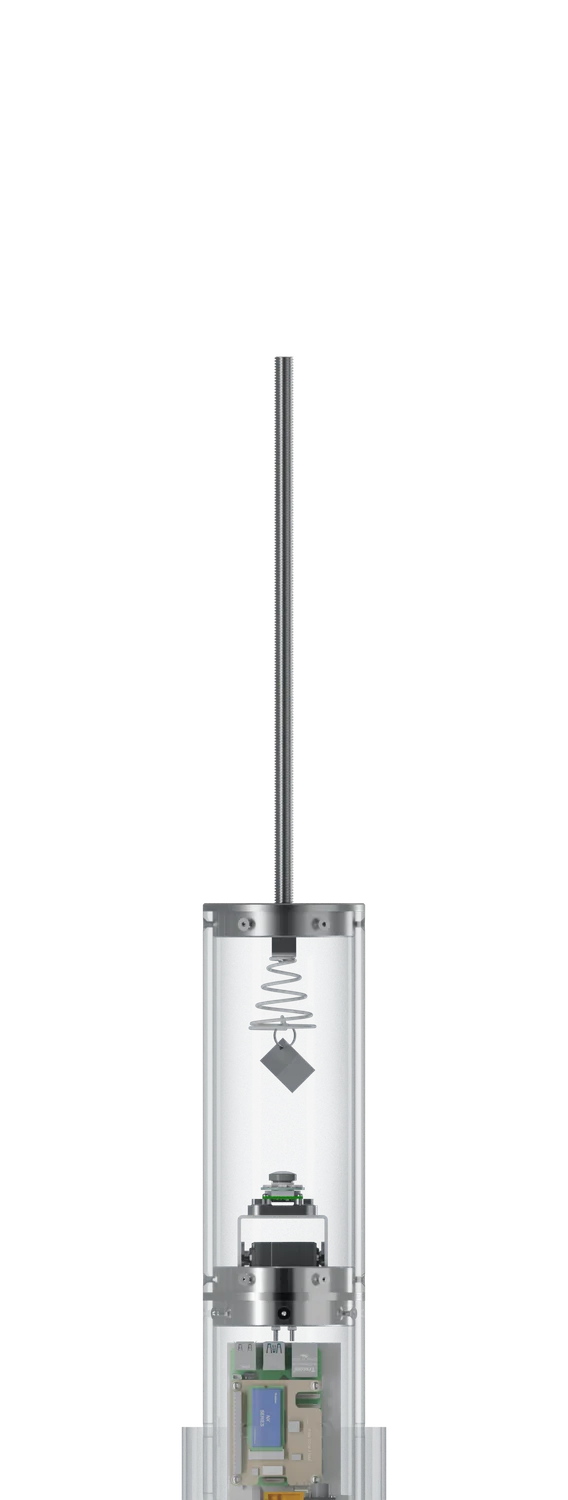
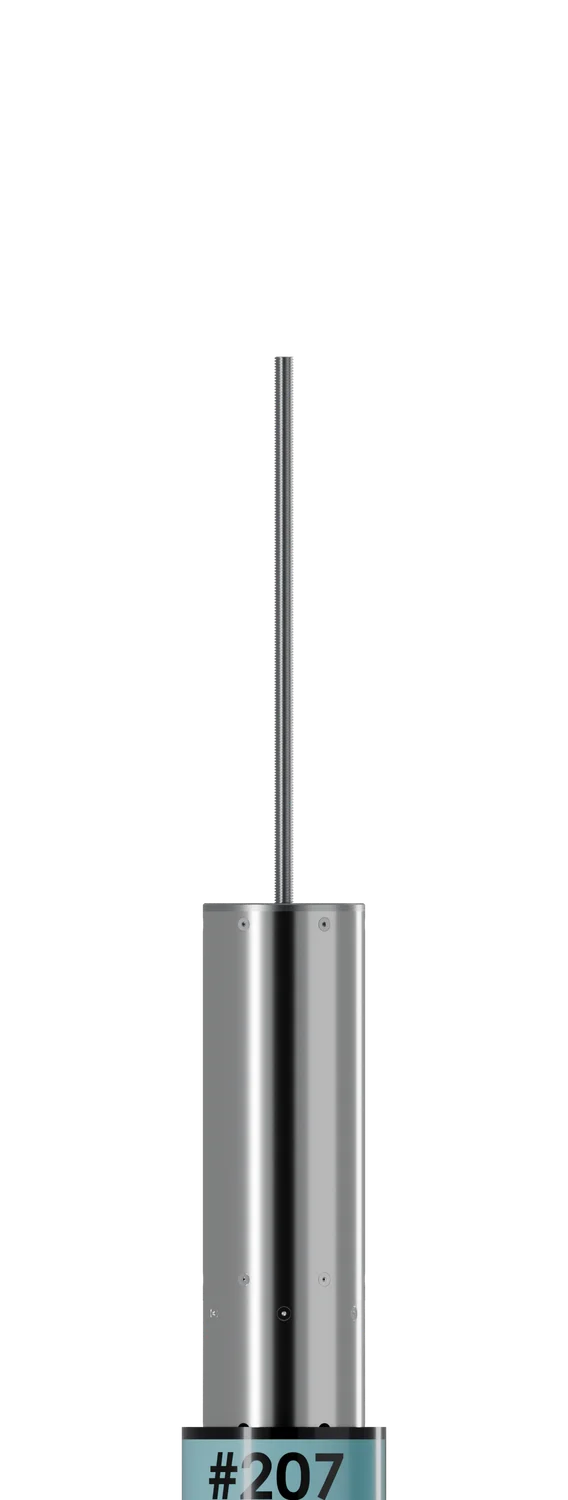
Vrishabha is a 4.55 kg experiment in a cansat: a steel cube on a spring, a camera on a servo that follows it, and a Raspberry Pi 5 working out the cube’s pose in real time while the rocket pulls up to 22 g.
- Mass
- 4.55 kg
- Size
- Ø100 × 450 mm
- Compute
- Raspberry Pi 5 + AI HAT+
Main parachute
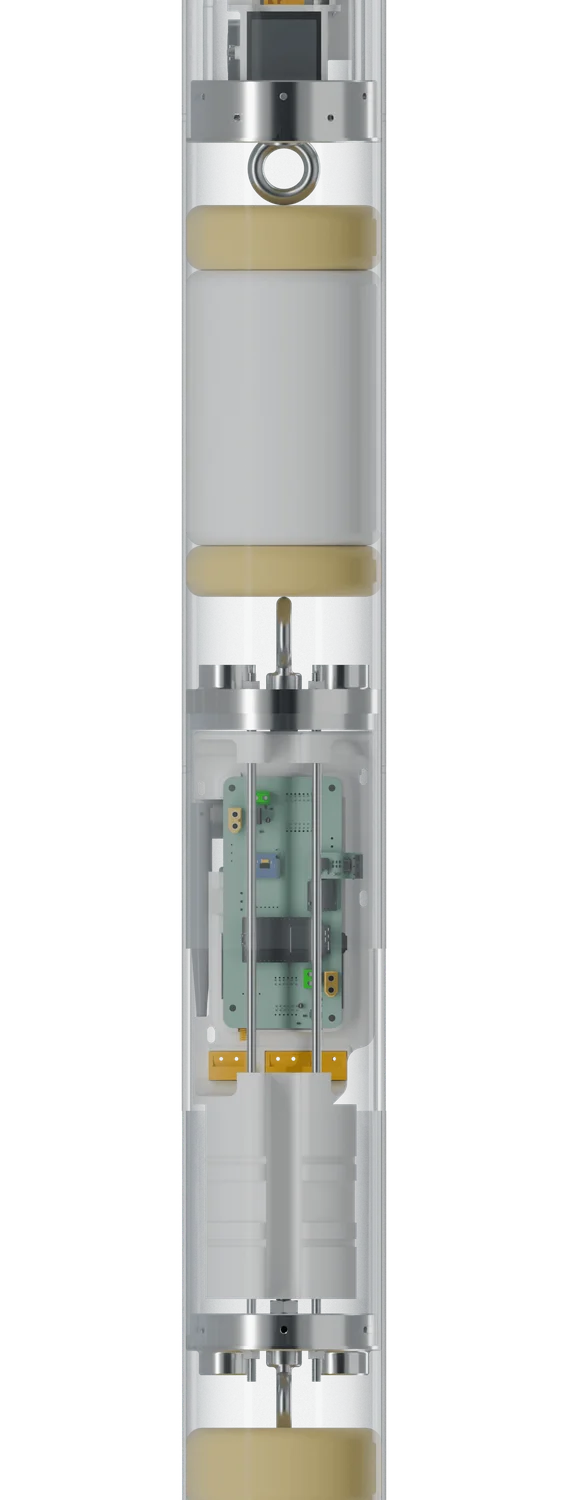
A 72-inch parachute packed above the avionics. It stays shut until 1,500 ft above the ground, and is sized to slow the rocket to 8.9 m/s for landing.
- Canopy
- 72 in Iris
- Opens
- 1,500 ft AGL
- Descent
- 8.93 m/s
Avionics
Two independent sets of electronics sit on one mount between the recovery bulkheads: a flight computer designed by the team and a bought-in altimeter. Each fires its own charge at both parachute events.
- Coupler
- GFRP · 390 mm
- Redundancy
- SRAD + COTS
- Bulkheads
- Al 6061-T6
Drogue parachute
A small 30-inch parachute, fired out at the top of the flight by five grams of black powder. It is sized for a 27.9 m/s fall until the main opens.
- Canopy
- 30 in elliptical
- Opens
- Apogee
- Descent
- 27.89 m/s
Coupler and thrust plate
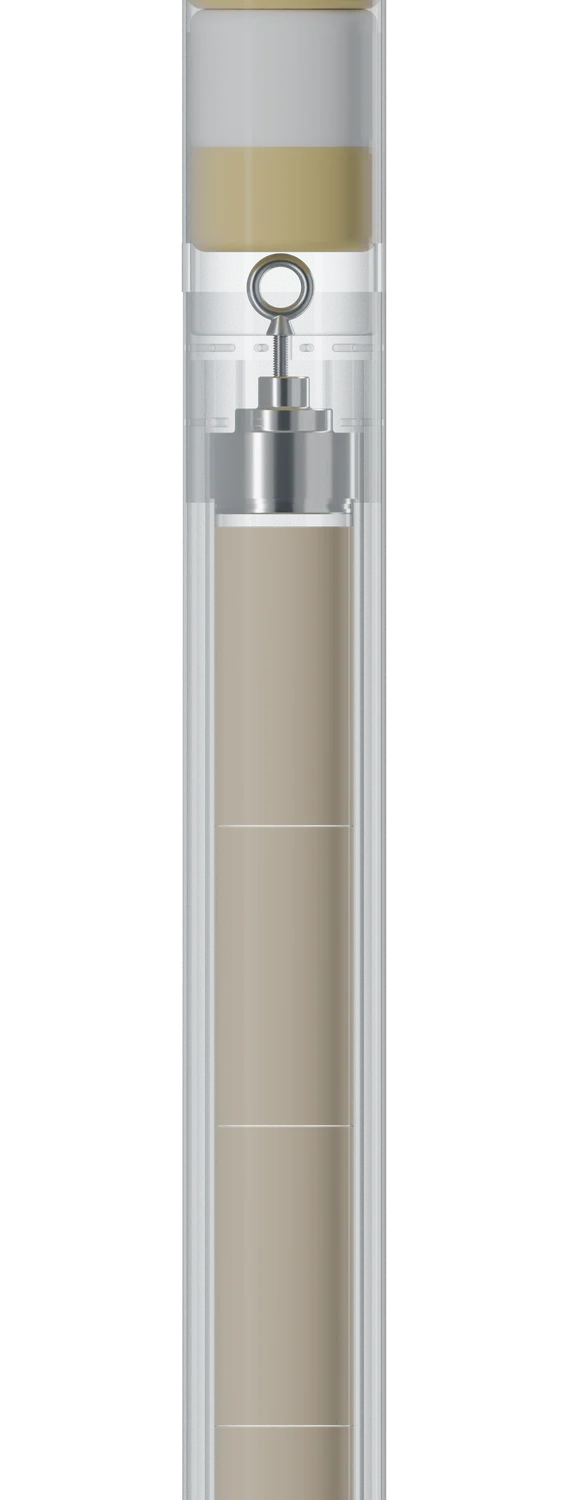
The joint that failed on the previous rocket, redesigned. It is machined from one piece of aluminium with the thrust plate built in, and carries the motor’s full push into the airframe.
- Material
- Al 6061-T6
- Thrust path
- 3/8 in eyebolt + 12 × M5
- Safety factor
- 9.45
Motor
An AeroTech O5500X: seven propellant grains in a wound-fibreglass case. It burns for four seconds and delivers 21,384 newton-seconds.
- Total impulse
- 21,384 N·s
- Burn
- 4.0 s
- Peak thrust
- 7,552 N
Fins and boattail
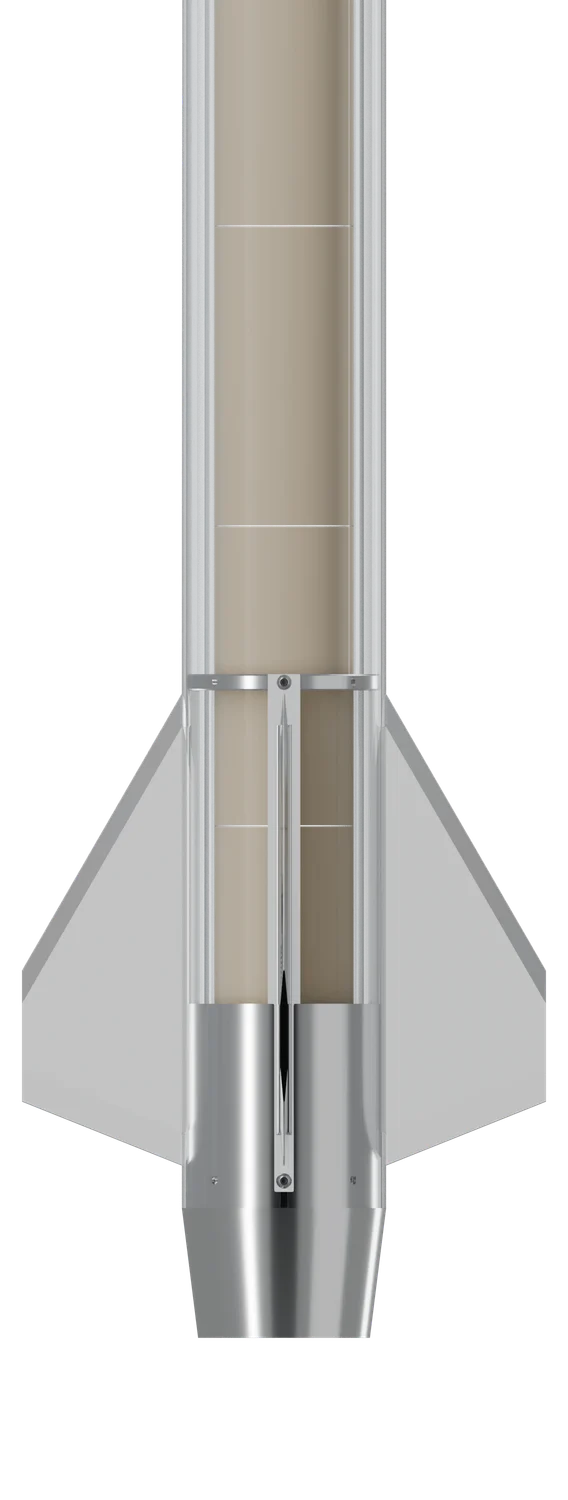
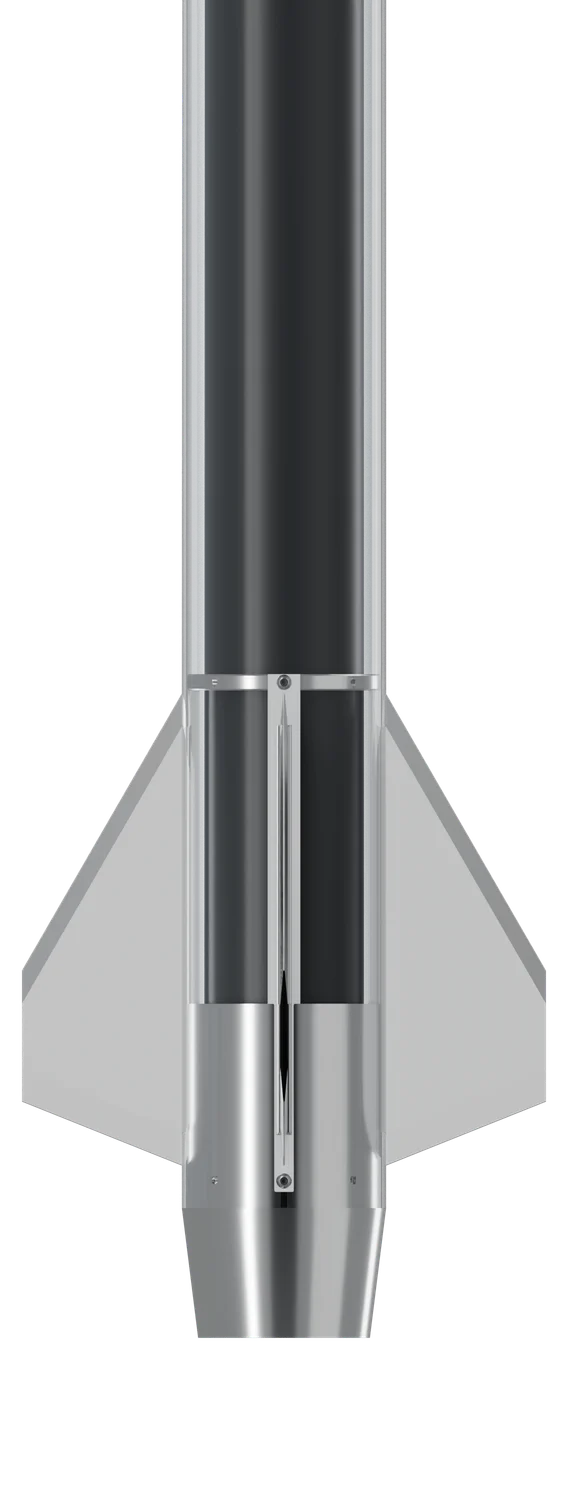
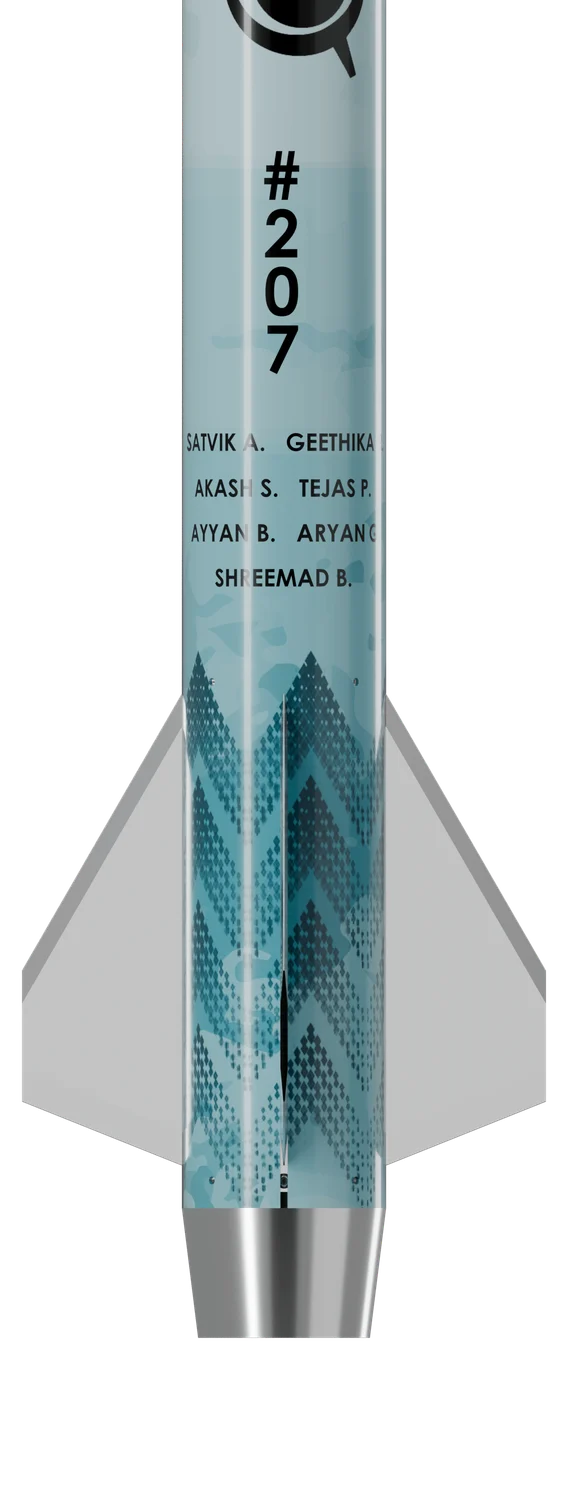
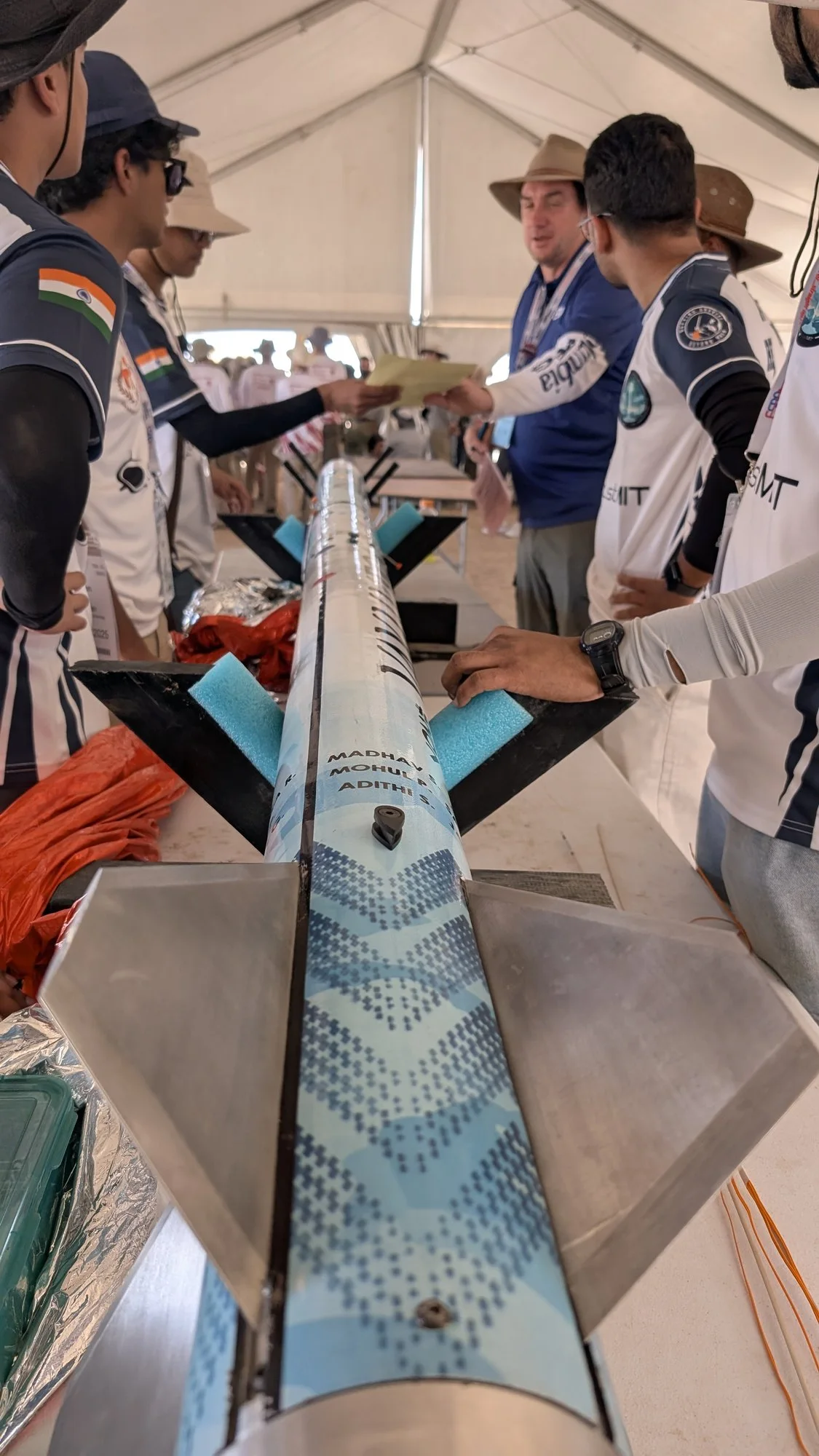
Four fins, each milled with its mounting rail from a single block. The tapered tail behind them cuts the drag of the blunt base.
- Fins
- 4 × Al 6061-T6 · 5-axis CNC
- Stability
- 1.65 cal on the rail
- Boattail
- 126 → 106 mm




- Nose cone. A tangent ogive, 5.6 times as long as it is wide: the ratio with the lowest drag in simulation. Carbon fibre laid up by hand in two moulds, with a machined aluminium tip.
- Payload. Vrishabha is a 4.55 kg experiment in a cansat: a steel cube on a spring, a camera on a servo that follows it, and a Raspberry Pi 5 working out the cube’s pose in real time while the rocket pulls up to 22 g.
- Main parachute. A 72-inch parachute packed above the avionics. It stays shut until 1,500 ft above the ground, and is sized to slow the rocket to 8.9 m/s for landing.
- Avionics. Two independent sets of electronics sit on one mount between the recovery bulkheads: a flight computer designed by the team and a bought-in altimeter. Each fires its own charge at both parachute events.
- Drogue parachute. A small 30-inch parachute, fired out at the top of the flight by five grams of black powder. It is sized for a 27.9 m/s fall until the main opens.
- Coupler and thrust plate. The joint that failed on the previous rocket, redesigned. It is machined from one piece of aluminium with the thrust plate built in, and carries the motor’s full push into the airframe.
- Motor. An AeroTech O5500X: seven propellant grains in a wound-fibreglass case. It burns for four seconds and delivers 21,384 newton-seconds.
- Fins and boattail. Four fins, each milled with its mounting rail from a single block. The tapered tail behind them cuts the drag of the blunt base.

Nose cone
A tangent ogive, 5.6 times as long as it is wide: the ratio with the lowest drag in simulation. Carbon fibre laid up by hand in two moulds, with a machined aluminium tip.
Payload
Vrishabha is a 4.55 kg experiment in a cansat: a steel cube on a spring, a camera on a servo that follows it, and a Raspberry Pi 5 working out the cube’s pose in real time while the rocket pulls up to 22 g.
PaperVrishabha: Edge-AI Enabled Real-Time Visual Perception System for Extreme Rocket Flight EnvironmentsMain parachute
A 72-inch parachute packed above the avionics. It stays shut until 1,500 ft above the ground, and is sized to slow the rocket to 8.9 m/s for landing.
Avionics
Two independent sets of electronics sit on one mount between the recovery bulkheads: a flight computer designed by the team and a bought-in altimeter. Each fires its own charge at both parachute events.
Drogue parachute
A small 30-inch parachute, fired out at the top of the flight by five grams of black powder. It is sized for a 27.9 m/s fall until the main opens.
Coupler and thrust plate
The joint that failed on the previous rocket, redesigned. It is machined from one piece of aluminium with the thrust plate built in, and carries the motor’s full push into the airframe.
Motor
An AeroTech O5500X: seven propellant grains in a wound-fibreglass case. It burns for four seconds and delivers 21,384 newton-seconds.
Fins and boattail
Four fins, each milled with its mounting rail from a single block. The tapered tail behind them cuts the drag of the blunt base.
PaperSubsystem-level aerodynamic optimization with max-Q-based system integration and flight testing of an experimental sounding rocket
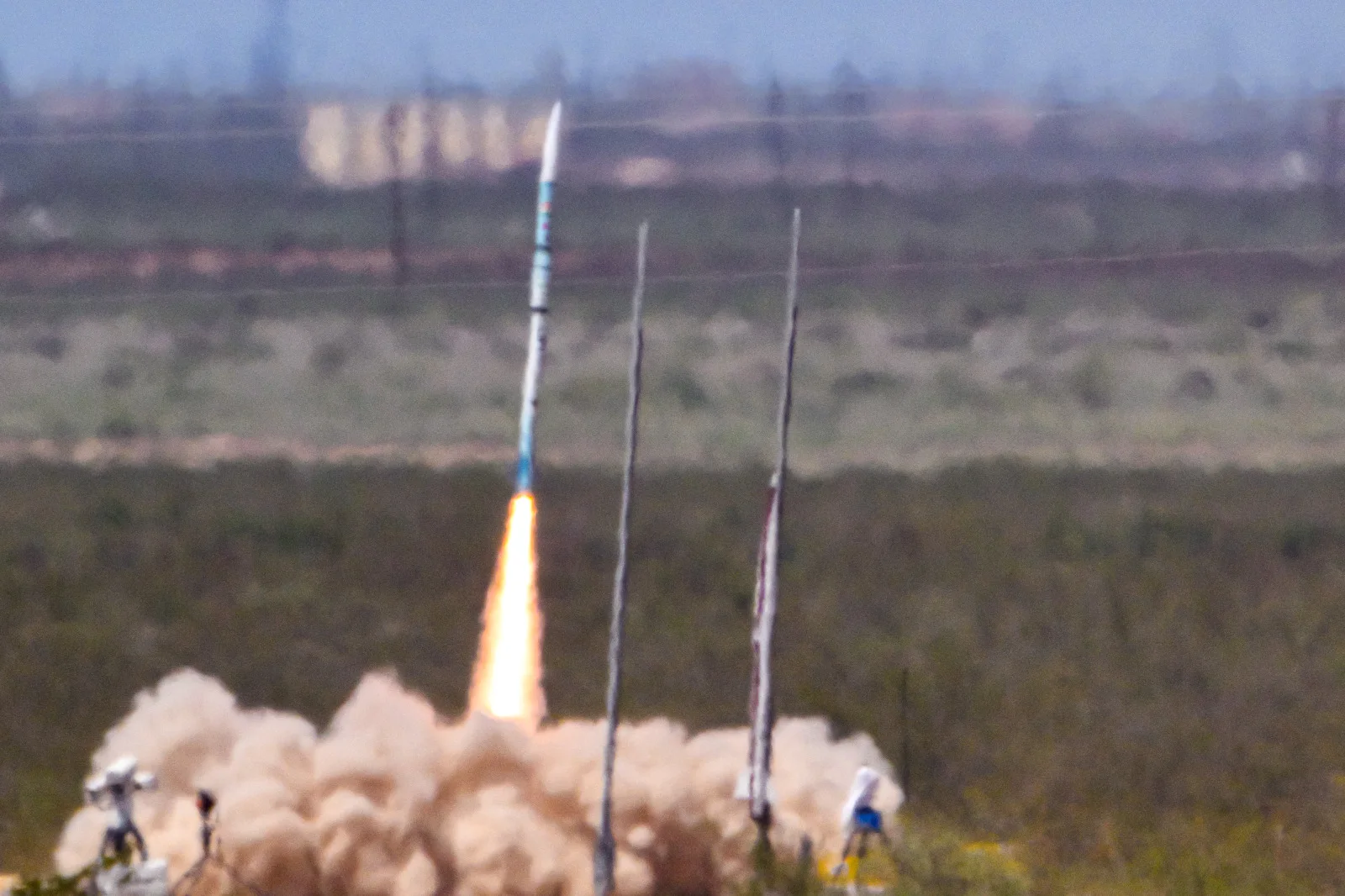
Launch
Gallery
Links
- thrustMIT project pagethrustmit.in
- Technical reportthrustMIT · PDF
- Paper: Vrishabha, the edge-AI payloadCRC Press · book chapter
- Paper: aerodynamic optimisation and flight testingAerospace Science and Technology · Nov 2026
- Official IREC 2025 resultsESRA · 2nd place, SDL Payload Challenge
- News story in The HinduThe Hindu Bureau · 30 Jun 2025
- University press releaseMAHE · 27 Jun 2025
- News storyKemmannu News Network · 30 Jun 2025
- Team video, IREC 2025YouTube · thrustMIT · 4 min
- Results reelInstagram · MIT Manipal · 18 Jun 2025
- Results postFacebook · MAHE Manipal
Next
Presently @
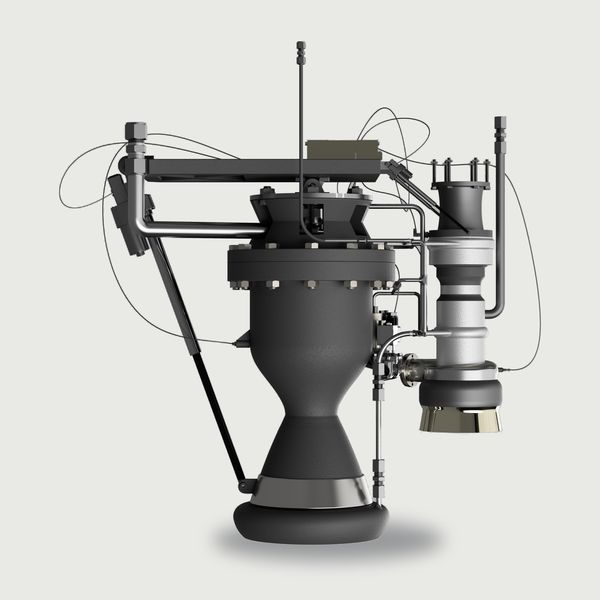
Thrustworks Dynetics
RoleJunior Engineer @ Technology Team
since Jan 2026